The NFL season is upon us and the countdown to the first regular season game has begun. My mind is consumed with betting strategies, analyzing data, and making predictions. As a die-hard Bears fan, it pains me to admit that I have made more money betting against them in the past decade than I could ever imagine. When it comes to my bankroll, sentimentality takes a backseat to cold, hard numbers.
In recent years, I have seen some major shifts in the NFL landscape. But before I get into that, let’s talk about the driving force behind every football team: the quarterbacks. In the unpredictable world of sports betting, one thing remains constant – the importance of quarterback performance. Gone are the days when mediocre or even poor quarterbacks could lead a team to victory (remember Trent Dilfer in 2002?) Today, quarterback play is not just correlated with winning, it is causation itself.
And as if that weren’t enough, other data trends have emerged in recent years, solidifying the paramount role of quarterbacks in determining championship success. Running backs, once seen as crucial pieces of a winning puzzle, are now treated like disposable pawns in an NFL team’s machinery – paid next to nothing and easily replaceable. The game has evolved and so must our strategies for wagering. Only those who truly understand and embrace the power of data will come out on top in this high-stakes game we call NFL betting.
The latest quarterback performance algorithms, akin to the speed ratings used in horse racing, have revolutionized the way I predict future NFL events. These powerful tools save me countless hours of analysis and bring a level of precision that was once unimaginable. Of all the options available, my personal favorite is the ESPN QBR system. Its innovative approach normalizes ratings based on defensive challenges, prioritizes clutch plays over meaningless statistics, and offers a reliable basis for comparison between players, across seasons, and even from game to game. With this system at my disposal, any obstacle in predicting NFL winning probabilities becomes less significant and a minor inconvenience on my path to victory.
Now, I will get back to quarterback but I have to offer some education and advice on wagering first. You see, every word on this blog is a testament to the unshakable truth: success in prediction and wagering hinges not on blindly picking winners, but on meticulously calculating probabilities and weighing them against the promised payoff. The stakes are higher than just predicting victors, they determine whether we emerge triumphant or broken. This is the holy grail of successful wagering – a high-stakes game of skill and strategy that only a select few can master.
While my actuarial friends and horse player buddies may understand this concept, I can’t help but feel conflicted. On one hand, I want to share my knowledge and simplify wagering strategy for those who may not understand. But on the other hand, part of me wants to keep it a secret, as it gives me an advantage over others in betting. It’s a constant internal battle that I struggle with every time I’m asked for advice.
Just like horse racing, sportsbook betting is similar to parimutuel wagering. The odds and lines shift based upon how the public bets. You are not betting to beat the racetracks or sportbooks, you are betting to beat your fellow gamblers! Let me try to explain with an example…
Let’s just say I have a strong belief that a horse or a football team has a 25% chance of winning a contest. That also means they have a 75% chance of losing. To determine my betting strategy, I divide the losing percentage by the winning percentage and get 3.00. This means I need to have odds of at least 3 to 1 in order to break even on my bet if my prediction is correct. The same principle applies to any horse or team with a 25% chance of winning – I would need odds of at least 3 to 1 to make the bet worthwhile.
You see, relying solely on instincts and hunches when it comes to wagering is not enough. It is crucial to analyze data and establish probabilities before making any bets. This is especially important in more complex wagers such as horse racing, where calculations can be easily done on a spreadsheet.
In sports like NFL football, odds are presented differently than they are in horse racing – usually in relation to $100. For example, the current odds for the Bears to win their first game is -205 on some sportsbook sites. The minus sign indicates that the Bears are the favorite and a bettor would need to wager $205 in order to win $100.
If I predict that the Bears have a 75% chance of beating the Titans in their first game this season, I also predict that there is a 25% chance of them losing. Dividing these percentages gives us 3.00. In football betting, this means betting 3 times the amount I could win is my breakeven odds point, or $300 to win $100. Betting less than $300 to win $100 would result in a profit for all such probabilities over time. Subsequently. betting only $205 would give me a profit. In other words, the payoff probabilities are higher than my predicted winning probability and if I always accept bets when that is the case, I will win long term, if my predictions are reasonably accurate.
This is just a simple example of a successful betting strategy and no, the media experts, who really aren’t, don’t know their ass from a hole in ground related to successful wagering. You will rarely hear this kind of strategy from them.
There is also a wide variety of other types of wagers one can make, but they all rely on predicting outcomes and calculating probabilities for long-term profitability. This serves as a fundamental lesson for beginners in effective betting practices.
While my predictions may not be perfect, they are reasonably accurate, which is why I always leave some room for error when making my wagers. For instance, instead of accepting that I have to wager $300 to win $100 in the previous example, I typically incorporate at least a 10% error margin when I wager, so I would only bet $270 or less to win $100 if I believed that the Bears had a 75% chance of winning.
Now let’s return to the topic of trends and quarterbacks. It’s quite astounding that no winning Super Bowl quarterback has ever ranked below 9th place, among the 32 teams, for quarterback performance in the season they won the Super Bowl over the last 8 years. Today, based upon current trends and regression analyses over two decades, the likelihood of a team with a mediocre or worse quarterback, ranking 13th or lower, winning the Super Bowl is only around 3-4%!
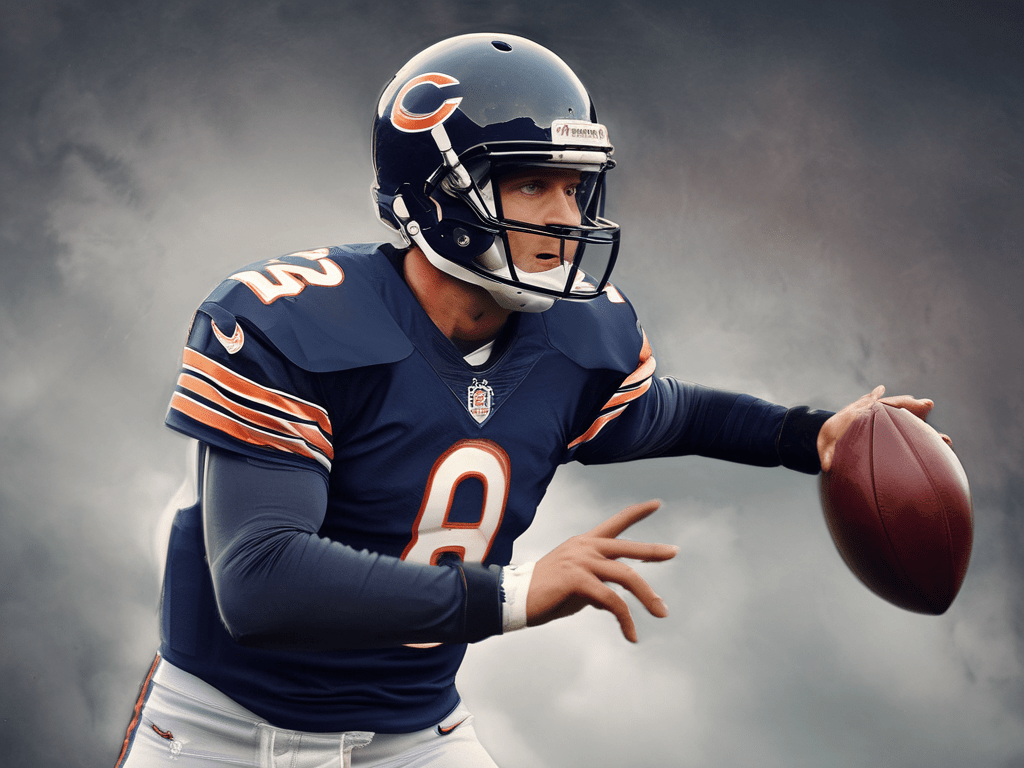
It’s no surprise that cunning NFL GMs made drafting quarterbacks their top priority in recent years. The desperation is palpable as teams fight tooth and nail for the next franchise player. And we can understand why the Bears hastily traded away bottom quartile performing Justin Fields, who barely scraped into the top 25 quarterbacks last season. Now he’s pitted against Russell Wilson (rank 21st last season) for the starting spot in Pittsburgh. Poor Mike Tomlin, who has never had a losing season as a head coach, is doomed for his first such season with his two mediocre QBs at the helm.
The names of legendary quarterbacks who achieved the ultimate feat of winning a Super Bowl in the past two decades still ring in our ears like a battle cry: Mahomes, Stafford, Brady, (Wentz/Foles), Wilson, Flacco, Peyton and Eli Manning, Rodgers, Brees and Rothelsberger. Their talent and success have solidified their place in football history, with all but the Wentz/Foles combination destined for the illustrious Hall of Fame, though of important note …. Wentz and Foles had the number one quarterback performance rating during the season that they did win the Superbowl for the Eagles!
But here’s the catch – over the last five years, 95% of the time you needed a quarterback ranked in the top half of the league to even be considered elite (making it to the final four teams or being in the top 12.5%). Only once did a quarterback rank slightly lower than average – Aaron Rodgers in 2019, a surefire Hall of Famer himself. This just goes to show that without a top tier quarterback leading your team, your season is already doomed before it begins.
GMs who are not actively seeking out a better than mediocre quarterback are setting themselves up for failure. And those who have not secured a top ten quarterback on their roster can forget about ever hoisting that coveted Lombardi trophy. So sorry Vikings fans – don’t expect 27 year old Sam Darnold, who has never performed above the league average QBR of 55 in any of his six seasons, to lead your team to the Super Bowl. Thank your GM for that mistake while you watch another non-Super Bowl winning season unfold. But after 64 seasons without one what’s a 65th?
Predictions for the season will be posted soon.
 Old Man Pondering
Leave a comment