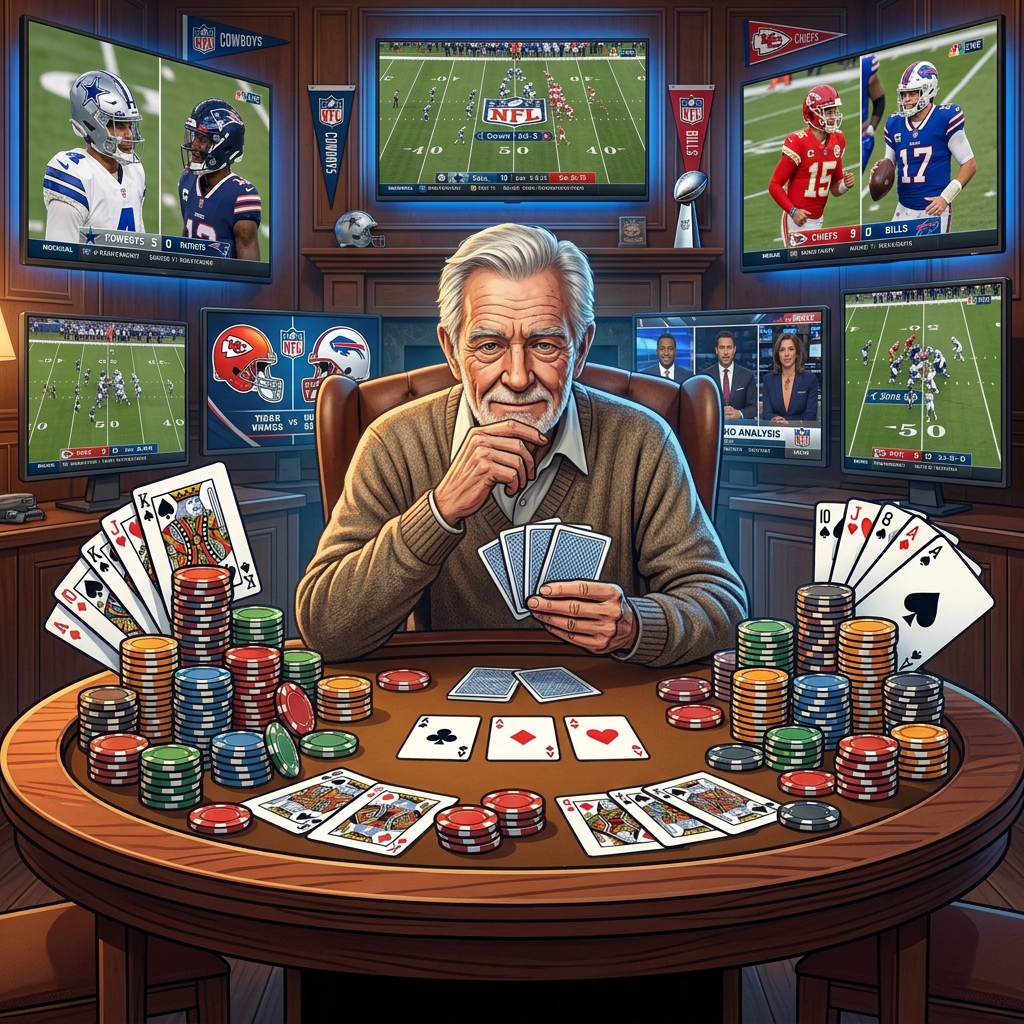
Gambling is a funny thing, because everything in life is a gamble. You roll the dice every morning you back out of the driveway—that the other fellow will stop at the red light, that the deer won’t jump the fence on the curve by the creek. You gamble when you pour your second glass of bourbon, when you bet on Sunday’s football game, when you hire a man on a handshake. Any time you stake something—money, time, reputation—on an outcome you can’t guarantee, you’re gambling.
After my recent post on the NFL with the kind of cold-eyed calculations most folks reserve for their taxes—I realized something. Most people don’t understand that there’s a world of difference between placing a smart wager and just throwing money at a hope. They treat gambling like a lottery ticket bought on a whim, not like a carefully weighed risk.
The smart ones sit down with the numbers first. They read the spread, check the injury reports, analyze the statistics, and only then do they weigh the risk against the payoff. If the math says bet, they bet. If it says pass, they pass, and they don’t look back. The dumb ones operate on something else entirely—a hunch, a grudge, the fact that their uncle once met the quarterback’s cousin. They’ll throw money at a long shot without knowing the odds, chase a loss with a bigger wager to get even, and have no more clue about their actual chance of success than a man guessing at the weather. This is where I explain why
“Gambling is a tax on the stupid!”
I never place a wager online. I only bet at retail establishments, and I’ll tell you why. I understand the appeal of online platforms—the convenience, the instant action, the fact that you can lay down money from your couch without ever pulling on a pair of shoes. That’s precisely the trouble. For anyone with an addictive streak who just wants “action,” or for those who let emotion do their forecasting, online betting makes it too easy to ignore every sensible rule of gambling. Lose a first-half bet? They can fire away on the second half before the halftime show ends. A fantasy player stinks up the first quarter? They’ll chase it with another player who catches their eye, right then and there.
A smart gambler doesn’t bet with his gut; he bets with his head. I run the numbers, study the matchups, and maybe place a handful wagers all week—never more. That’s why I only gamble in person. It forces a pause, a moment of consideration between the thought and the action. On your phone, it’s too easy to chase a loss or double down on a dumb hunch before you’ve even taken your next breath.
Ever wonder why the online casinos and sportsbooks advertise like there’s no tomorrow, flooding your screen with “risk-free” bets and deposit bonuses? Don’t. They’ve already got you—hook, line, and sinker. They don’t just skim a little off the top; they take a cut of every single dollar you wager—the vig, the house edge, the built-in profit margin that makes their business a license to print money. U.S. sportsbooks, which were practically nonexistent a few years back, are on track to clear nearly $200 billion in profit this year alone. They aren’t built on winners; they’re built on the steady, stupid losses of people who think they can beat a system designed from the ground up to break them.
So, take it from a man who’s placed successful bets his whole life, though they may have been in a few hushed, carpeted quiet backrooms: intelligent gambling is a cold calculus. It has nothing to do with the hot rush in your chest when your team scores, the blind loyalty to a hometown jersey, the desperate need to feel the action in every quarter, or the foolish belief that luck is a strategy. It is the opposite of a tax on the stupid; it is a discipline for the clear-eyed.
Such is the life of successful gamblers, unless as my good friend once said, “I just have to place a bet on my neighbor’s horse”, and you can afford to lose.


Leave a comment