• The Truth Behind Current Economic Claims

    Well, last evening we were treated to a one hour and 47 minute speech, the President’s face glowing orange-pink under the harsh lights, his voice rising and falling across that cavernous chamber. His words bounced between moments of startling clarity and fabrication—which as any weathered independent like myself can tell you, is the political tradition stretching back to powdered wigs and quill pens. So, here’s a little truth based on the data.

    Yes, inflation is down but not the lowest in history. For the truth, read my earlier blog post.

    So, You Want the Truth, But Can You Handle It? – Old Man Pondering

    Yes, the market is up but it always goes up. For the truth, read my earlier blog post.

    The Truth About the Market – Old Man Pondering

    Yes, Fentanyl deths are down. For the truth, read my earlier blog post.

    Some Aces You Can Hold. – Old Man Pondering

    Yes, immigration crime is down but the ICE process to target illegal immigrants as the most important group to drive crime down was simply a red herring compared to other groups of people, such as drunk drivers, who kill more US citizens in a day than illegal immigrants kill in a year. For the truth, read my earlier blog.

    A Perspective (DUI vs. Immigrants) – Old Man Pondering

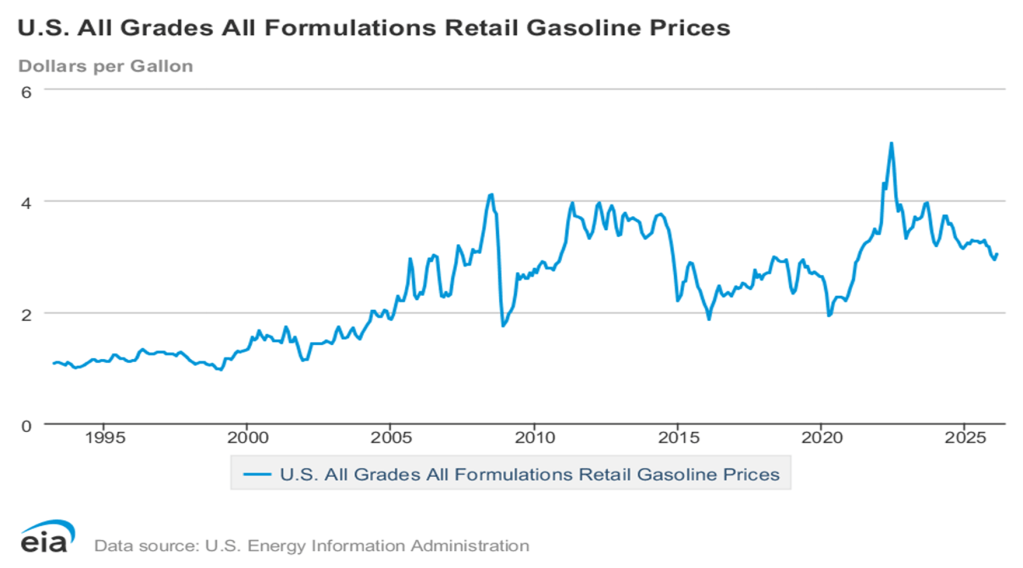
    Yes, gas prices are down from historical highs in 2022 but near the average of the last two decades, and within the range of common cause variation. The current average price per gallon for regular gas is $2.98 per gallon nationwide and $2.64 in Kentucky, not $2.30.

    Such is life.

  • Understanding the Canine Crisis: Adopt, Don’t Shop

    I have been a dog owner all my life, and there are few things I have treasured more than my canine companions. After my coal-black lab Prince—with his velvet ears and graying muzzle—passed away last year, I am now a 73-year-old man with just one little companion: a little bug-eyed chihuahua named Poppy who weighs less than the Sunday newspaper and sleeps curled against my hip every night. Her coat has thinned with her ten years, and her tiny paws make clicking sounds across our PVC floors. It is because of that bond—that silent understanding between man and dog—this week’s truth bomb from a weathered old Kentucky farmer is focused on the false nature of understanding what really goes on in dog land.

    Last night, a glossy ASPCA commercial flickered across my television screen, begging for $60 donations to rescue a trembling, emaciated shepherd mix with matted fur. The three-minute montage showcased skeletal puppies shivering on concrete floors, that made my stomach clench. As haunting piano music played, I remembered a data investigation I conducted a while ago about national charities.

    Did you know the ASPCA’s CEO devours a staggering $1,200,000 salary annually. Other executive there gorge on half-million-dollar salaries. Their propaganda machine fundraising events and parties, which the executives so enjoy, cost $80,000,000 annually, which is almost 20% of their revenue! Most sickening was a $9,300,000 settlement they flung at accusers to bury a RICO lawsuit. The ASPCA was accused of violating the Racketeer Influenced and Corrupt Organizations Act through a scheme involving bribes to a witness.

    Oh, and here’s another fact that might shock you: your ASPCA donations do not trickle down to your local county shelter, where exhausted volunteers launder urine-soaked blankets and comfort trembling strays. Those organizations operate under entirely separate financial systems, despite what the heart-wrenching commercials with their slow-motion footage and melancholy piano music might lead you to believe. Your local shelters, try to raise their own funds, spending more like 5 or 6% of their revenue to fund raise.

    I have always known charlatans abound in this world, and while organizations like the ASPCA are maddening, the true ugly nature of the canine world is even more perverse. You see, about 350,000 dogs—tails tucked, eyes pleading from behind cold kennel bars—are euthanized from overcrowded animal shelters annually in America. And here’s the real rub. Approximately 2.1 to 2.6 million puppies, are purchased from the over 10,000 puppy mills scattered across the United States each year, where breeding dogs spend their entire lives.

    Buying a dog from a puppy mill or a pet store bankrolls a nightmare factory where female dogs spend their lives confined in wire cages. Puppies born in these hellscapes rarely see sunlight until they’re crammed into transport crates bound for pet shops, while their mothers remain behind, trembling at human approach. 

    Instead of supporting this industry, consider adopting from a local shelter or rescue group where eager faces press against kennel doors, where tails wag with desperate hope at each passing visitor, where a perfect companion waits—one whose life you’ll save with a simple choice that simultaneously ensures your money doesn’t finance the cracked paws and infected wounds of breeding dogs trapped in filthy cages.

    So now you know what the data says about the canine world—the cold numbers that represent warm bodies shivering in kennels. The truth should pierce your heart like a rusty nail. Stop supporting those Madison Avenue charities with their gleaming headquarters and million-dollar executives. Stop buying dogs from breeders with their polished websites and pet shops with puppies pressing wet noses against glass. Start contributing to your local shelters—those cinder-block buildings on the edge of town where volunteers’ cars fill the parking lot on weekends. Review their financial statements first; the good ones will show every penny spent on vaccines, kibble, and heartworm medication.

    ADOPT. The dog you bring home—whether a copper-colored chihuahua or a coal-black lab with graying muzzle—will gaze at you with amber eyes full of gratitude until their last breath. They know, in that wordless way animals understand things, that you saved them from the needle or the gas chamber and gave them a warm bed beside your hip at night. And importantly, those shelter kennels contain every imaginable dog—from blue-eyed huskies to square-jawed boxers—all waiting behind chain-link doors across America.

    It’s sometimes hard to do the right thing, even when your conscience whispers the answer in your ear, but believe me, once you know the truth, nothing compares to the weight of a warm, breathing creature curled against you, their chest rising and falling in peaceful sleep, knowing they are finally, irrevocably home.

    Simply, adopt and donate to local shelters! Make life better for all.

  • The Truth About the Market

    Just last month, I posted the truth with data links to crime and inflation statistics which currently indicate meaningful declines in both. Within hours, my inbox overflowed with triumphant messages from my red-hat-wearing readers, their comments practically glowing with self-satisfaction as they explained how their party’s iron grip on the House, Senate, and that big white mansion on Pennsylvania Avenue had single-handedly rescued America from the brink of disaster.

    Then a few days ago I posted the truth about immigration enforcement in that crime and homicides are positively affected by ICE, but actually immigration crime is a false flag compared to much more serious issues like DUI’s. Yes, the data is clear, and half-ass state laws and penalties create DUI homicide claim victims at more than “400 times” the rate of homicides committed by undocumented immigrants. My liberal friends, practically tripped over themselves hitting the like button on that one.

    First, I love you both. My conservative and liberal friends alike have wonderful, and some not so wonderful, traits which I appreciate. You see, variation is part of the human condition, and unlike some others I accept that. Unfortunately, many people are blinded by beliefs, while some old men like me will always only see the truth that emerges from properly analyzed data, and fight for that truth.

    I know that politicians and politics are like carnival funhouse mirrors that transform reality into grotesque distortions. I watch them strut across cable news stages, chests puffed out like roosters, claiming personal responsibility for every positive indicator as if they’d personally stocked grocery shelves or balanced the nation’s checkbooks by moonlight.

    This article sprouted from a jaw-dropping moment I witnessed while hunched over my laptop Wednesday afternoon, as I indulged in my embarrassing habit of watching government press conferences live. There on my screen, former Florida Attorney General Pam Bondi was testifying before the House Judiciary Committee regarding the DOJ’s refusal to release all the Epstein files. The irony thickened like Kentucky gravy when Bondi, pivoted to lecture house Democrats for focusing on Epstein when she thinks they should be thanking the current administration for the Dow Jones’ record climb. I nearly spilled my lukewarm coffee, and here’s why.

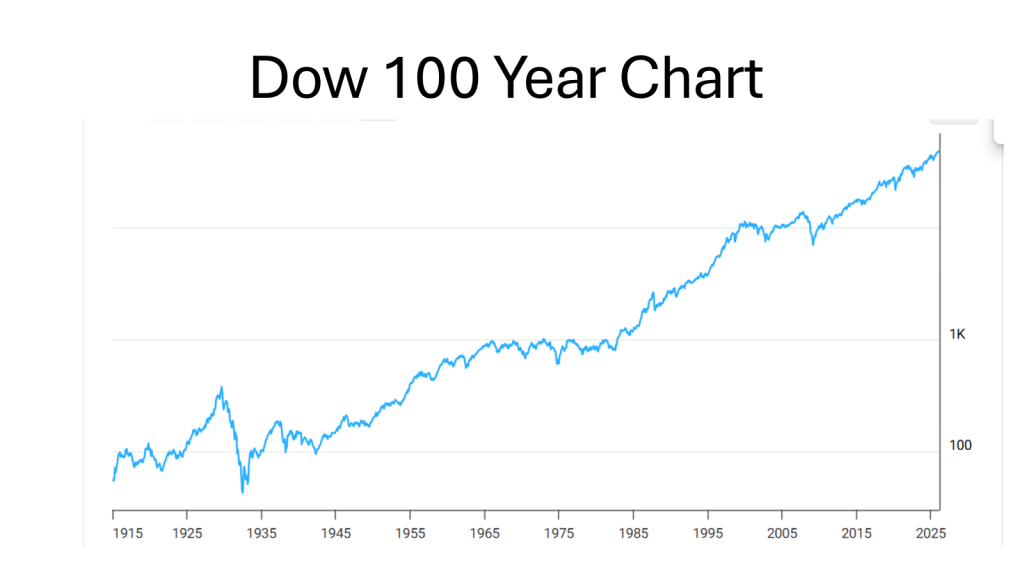
    When you look at data, one of the many things you do is calculate special versus common cause variation, as well as evaluate trends. Here is a simple graph of the DOW over the last 100 years.

    I won’t waste your time with the immensely boring calculations but tell me what you see. You should see that the stock market has always gone up, as has inflation by the way, and it’s been pretty consistent. In fact, with rare exceptions, see the pre- and post-depression period, the market has gone up very predictably and “within” common cause parameters once you properly understand the ever-increasing trend. For example, in the last 50 years alone the market has gone up 132% every decade!

    In other words, any administration—whether donkey-branded Democrats with their blue ties and progressive promises or elephant-emblazoned Republicans with their red caps and traditional values—claiming credit for the inevitable expected continuing upward trend in the market is like a rooster taking credit for the sunrise, chest puffed and crowing triumphantly while the sun follows its inevitable path.

    And now you know what stupid things an “Independent”old man who ponders finds funny. Such is life.

  • A Perspective (DUI vs. Immigrants)

    I’ve wrestled with this long article for weeks, and I hope my family actually takes the time to read this one. (HaHa) My commitment to truth—that seventy year old stubborn beacon that guides me—finally drove me to an unsettling conclusion. What follows is the complete account of my research and discoveries, regardless of whose toes get stepped on.

    You see, as an Independent who’s spent decades watching the political pendulum swing, I have a diverse circle of friends and relatives spanning the entire ideological landscape. Some friends and relatives share every red-tinted headline that crosses their Facebook feed without so much as glancing at the source. Meanwhile, others with their NPR tote bags, fall into the same trap from the opposite direction, spreading blue-tinged articles with equal abandon. Both extremes hit that share button with trigger-finger reflexes, never pausing to verify. Sure, maybe 75% of what they circulate contains kernels of truth, but that other 25% spreads like poison ivy through our national conversation, inflaming and dividing with falsehoods.

    For me, as a father whose hands once held our five children and now use my weathered fingers to grip the hands of my grandchildren and great grandchildren, I believe it is incumbent upon me to strive for the certainty of verifiable truth. I need to know I’m carving a path through the wilderness of media misinformation that future generations can follow toward genuine success. Opinions and lies that agree with your belief systems may glitter, but truth endures. Values matter So Teach Your Children Well, and know the future withers on the vine unless we care enough to nourish young minds with truthful values.

    With this said, I constantly see heart-wrenching photographs of grieving families displayed alongside lurid headlines about murders committed by undocumented immigrants— used to justify ICE’s most heavy-handed tactics. Now, don’t get me wrong. The letter of the law is as clear as Kentucky spring water to me, and the mission to remove violent offenders from our streets is as necessary as a good fence on my horse farm. The blood-soaked crime scenes and shattered lives left in the wake of any violent assault demand justice.

    I honestly think even the most protest-sign-waving liberals would nod in agreement on that point. What raises their hackles are the dawn raids that leave children screaming, the unmarked vans idling outside schools and community centers, and the handcuffs slapped on tax paying dishwashers and farmhands whose only crime was crossing an invisible line in the desert sand. And guess what? The new head of ICE, with his weathered face and brass-tack pragmatism, has acknowledged this truth!

    Yep, Tom Homan—the grizzled, square-jawed ICE director with thirty years of border enforcement etched into the lines of his face—understands that it’s not just what you do but how you do it that matters. He has already begun publicly acknowledging that previous tactics crossed lines, alienated communities, and undermined ICE’s core mission, evidenced by his implementation of several substantive operational changes across multiple states.

    His initial 700-person drawdown hinges on local cooperation. Homan’s reforms include mandatory body cameras, a centralized command center, and focus on jail transfers rather than street operations. Legal monitors now oversee all activities. By targeting only violent offenders, ICE needs fewer agents—just two can now handle arrests that previously required eight, even in sensitive locations like schools or businesses.

    Now, because I’ve spent decades hammering home the critical importance of understanding statistical variation—those crucial numerical differences that separate truth from exaggeration—I believe we must train ourselves to differentiate between genuine threats and manufactured fears, to determine what truly deserves our national attention and limited resources.

    With that said, I’m now going to shock you with some sobering statistics. According to federal databases, in 2024, 29 murders were committed by non-citizens across the entire United States. Each murder was a a tragedy that shattered families and communities. That sounds devastating, doesn’t it? But here’s the gut-wrenching perspective: yesterday alone, while you were going about your daily routine, 37 Americans on average drew their final breaths at the hands of DUI drivers. Yep, 37 murders! Even more heartbreaking, 9 of those victims were children from 0 to 14 years of age. Not annually, not monthly, but daily. Let that sink into your bones.

    Criminal Alien Statistics Fiscal Year 2024 | U.S. Customs and Border Protection

    Impaired Driving Facts | Impaired Driving | CDC

    Now consider this. A DUI conviction in a state like Wisconsin—where beer flows like water through the veins of Friday night fish fries and tailgates—generally treats a standard first-offense OWI (Operating While Intoxicated) as a mere civil forfeiture, not even rising to the level of a criminal misdemeanor. The punishment? No cold steel of handcuffs or concrete walls closing in, just the sting of a financial slap on the wrist: court costs typically bringing penalties to $700–$1,100—less than the price of a decent used riding lawnmower—and driving privileges revoked for a paltry 6 to 9 months, and of course people don’t need a license to operate a vehicle do they?

    But here’s the other shoe to drop, approximately one third of all DUI murders are committed by repeat offenders who’ve already faced a judge, paid their paltry fine, and been sent back to their driver’s seats. So, let’s do the cold, brutal math that no politician wants to acknowledge. If 37 innocent Americans—mothers, fathers, teenagers with prom corsages still pinned to their formal wear—are killed by drunk drivers every single day, and 9 or so of those flag-draped caskets contain victims age 0-14, I guess that 6 to 9 month license revocation—a flimsy paper punishment that can be ignored as easily as yesterday’s junk mail—isn’t much of a deterrent when you consider the blood-soaked reality. Yes, over 4,000 American heartbeats are permanently silenced every year by drivers who’ve already been caught once and released back onto our highways!

    Our legal system remains riddled with blood-soaked contradictions that would make the Founding Fathers weep. A repeat DUI offender, faces less severe consequences than a sun-baked migrant who crossed an invisible line in desert sand while carrying nothing more lethal than empty water jugs and desperate dreams. Alcohol-impaired drivers slaughter over 13,000 innocent Americans annually in violent collisions that leave twisted metal and shattered families scattered across our highways every year. Four thousand of these preventable tragedies come from the hands of drivers who’ve already faced a judge once before. Meanwhile, the undocumented immigrants that dominate our political nightmares account for exactly 29 homicides per year nationwide. I can’t help but imagine the empty chairs at dinner tables that would still hold laughing children and grandparents if we locked away first-time drunk drivers for three solid years in cold prison cells, and repeat offenders for two decades of hard time.

    Right or wrong, the cold, hard numbers force me to lie awake at night when my granddaughter takes her boyfriend’s car to the homecoming dance, or when my Minneapolis daughter works late and drives home, after arguing her way through ICE agents to pick up her 1- and 5-year-old daughter and son from school on a Friday evening. Yet I’ve never once felt my pulse quicken when Jorge, with his weathered hands and halting pronunciation, serves me chile rellenos at their family-owned cantina where three generations work the kitchen and dining room.

    Yep, “Teach Your Children Well” and know that ignorant hypocrites and politicians abound in this world. Such is life.

  • Some Aces You Can Hold.

    As the title suggests, here are some cold hard truths you can deposit directly into your mental bank account. Why? Because numerical data stands before us like a mountain of irrefutable evidence, that even the most stubborn skeptics should recognize. My Truth comments of course range from silly myths to very important subjects that seem to be misunderstood. Nevertheless, the conclusions drawn from this analysis aren’t mere opinions, they are based on credible data.

    On two serious subjects to begin the march toward truth, the cold, hard numbers don’t lie: fentanyl’s deadly grip on America has loosened significantly. The charts from the CDC reveal a precipitous 32% drop in overdose deaths compared to the blood-soaked statistics from just eighteen months ago. Secondly, the FBI’s meticulous quarterly crime report—a treasure trove of data compiled from 17,000 law enforcement agencies nationwide—shows violent crime plummeting like a stone in still water, with double-digit percentage drops in metropolitan areas once plagued by gunfire and sirens. As always, politicians will strut and preen, claiming credit for these seismic improvements like roosters taking credit for the sunrise. I won’t waste precious time connecting these statistical dots or manufacturing causation where correlation may suffice. However, the undeniable truth remains, something profound has shifted in America’s social landscape, and it falls to you, to determine why these grim metrics have suddenly, dramatically reversed course.

    Now to climate change. It is real and always has been, like the ancient rhythms of Earth’s breath. What isn’t real are those apocalyptic, hand-wringing predictions of IMMINENT change that flood our news feeds. For example—and I remember this vividly—in 1993, one of the greatest drama queens in modern history, Al Gore. He graced us with his monotone voice and PowerPoint slides in the 90’s and made many doom-laden predictions. One particular foolish comment of his always stuck with me. The pristine, glittering snows of Kilimanjaro would vanish completely within a decade! Yet here we are, 30 years later, and those majestic white caps remain stubbornly present. Florida is still above water and I just watched 8 inches of thick, wet Kentucky snow blanket my Louisville front yard last week.

    How could such a genius that so many foolishly believed be so wrong? Because he’s not! The hard, cold data clearly indicates that “variation” in our climate has always existed and will continue to exist, but the kind of dramatic, civilization-ending change that weather terrorists—with their colorful graphs and computer models—would have you believe is about as predictable as next month’s forecast.

    Now for some silly truths. There is no Sasquatch lurking in the misty Pacific Northwest forests, no hulking Bigfoot leaving mysterious footprints in virgin snow, no red-eyed Mothman perched on West Virginia bridges, and no glistening, spiral-horned Unicorns prancing through enchanted meadows. Yet the so-called documentary media—which abandoned actual historical programming faster than teenagers fleeing a homework assignment—bombards us weekly with stupidly manufactured stories and grainy night-vision footage, accompanied by breathless “eyewitness” testimonials.

    Oh and by the way, the fabled treasure on certain islands—like a waterlogged patch of Nova Scotian soil that’s been excavated more thoroughly than a dentist works on a molar—was found and retrieved by others long ago. Today’s silly tales are designed to manipulate gullible viewers into a delusional audience that believes European sailors, merchants, and explorers, (who we all were taught decades ago visited North America centuries earlier), somehow left behind glittering hoards of Spanish doubloons, ornate jewel-encrusted chalices, or even the Ark of the Covenant. Are we seriously expected to believe these seafarers buried their most precious possessions in elaborately booby-trapped pits, then sailed away without any intention of returning for their wealth?

    Consider this irrefutable fact: in an era when crystal-clear smartphone cameras document every mundane breakfast plate and discovery technology no one could have ever dreamed of 500 years ago exists, not one convincing photograph exists of mythical creatures or hidden treasure on islands in Nov Scotia. With 8.3 billion humans carrying 6.5 billion cameras, and another 1.3 billion permanently mounted around the world, capturing everything from rare meteorological phenomena to celebrity wardrobe malfunctions, the complete absence of verifiable evidence isn’t merely suspicious—it’s hilariously damning. The blurry photos and shaky videos trotted out as “proof” of any manner of foolishness should insult the intelligence of anyone with a functioning frontal lobe.

    Such is life.

  • So, You Want the Truth, But Can You Handle It?

    I started thinking about creating articles that would cut through the fog of today’s headlines like a lighthouse beam—illuminating the jagged rocks of misinformation that shipwreck public discourse. As my fingers hovered over the keyboard, poised to unleash a torrent of personal grievances, I caught myself violating my cardinal rule: facts and data over opinions and diatribes.

    That’s when it struck me—I should dissect these inflammatory topics with precision, extracting the TRUTH from beneath layers of media sensationalism, where cherry-picked statistics and manufactured outrage have replaced substantive analysis, leaving viewers intoxicated on emotional spectacle rather than soberly informed. The mind-numbing foolishness of digital echo chambers—where cherry-picked statistics and context-stripped video clips circulate like communion wafers—and the Grand Canyon-sized gulf between worldviews—parallel realities—is what I’m examining today.

    In my last post, I explored the delicate balance between understanding human variation and the searing pain that comes from ignoring it. You see people today feast on drama or sensory carnage—a sobbing mother clutching deportation papers on evening news, mascara-stained tears tracking her cheeks; a teenager’s fractured skull on wet pavement. Our attention gorges on screaming headlines that flash across our screens, pupils widening with each notification. Meanwhile, substantive truth—methodical data in government reports and peer-reviewed research that might actually illuminate our path—remains neglected like vegetables abandoned on a child’s plate.

    We consume spine-tingling anecdotes while rejecting statistical analysis that demands cognitive effort. Why? Because these visceral narratives confirm our existing beliefs with sniper-like accuracy, delivering selectively curated evidence that reinforces our mental frameworks. We mistake the blinding flash of isolated incidents for the steady illumination of reality. Like disoriented moths, we crash repeatedly against the nearest bright distraction while the vast constellation of interconnected truths extends ignored above us.

    So you want the truth based upon data, analysis and research? The kind that emerges from credible spreadsheets, graphs and surveys? Trust me, some of these truths will slide into your belief systems like a key into its lock, but many will stick in your throat like fish bones. The systemic data—those cold, unyielding numbers glowing on my monitor at 3 AM—defines a truth that stands immovable as granite. Why the truth is what it is, is another subject as people elect to blame others if it’s bad and claim credit if it’s good. I have spent decades watching both sides cherry-pick convenient statistics, as they define cause versus effect. I will tell you what is, not why it is. In other words, the truth dictated by the data remains etched in silicon whether it makes you nod in righteous satisfaction or sends you storming away from your screen.

    I will dissect one pressing issue each week with surgical precision, using data to strip away the emotional hyperbole that clouds our judgment. My scalpel will cut through everything from the invisible tax of inflation that affects your wallet, to the crime statistics manipulated by both parties, to the silent epidemic of fentanyl deaths ravaging small towns, to the eroding trust in institutions once considered sacrosanct, to the casino-like volatility of Wall Street, to the human drama associated with immigration enforcement. Consider this your weekly inoculation against the contagion of misinformation. Now, let’s begin this week’s autopsy.

    What’s the truth about Inflation?

    As of January 2026, the naked truth about inflation is that the breakneck pace has slowed. The annual inflation rate stands at 2.7% for the 12 months ending December 2025. That’s down slightly from the prior year, and down considerably from the recent over 8.0% peaks in 2022.

    Here’s the inflation breakdown for November 2025 — in one chart

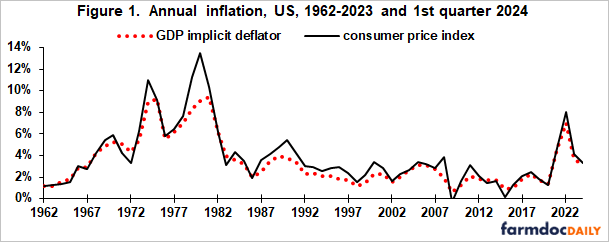
    With all this said, if you think a 2.7% annual inflation rate is high and things are awful, you’ve never witnessed the economic maelstrom that engulfed America in the late 1970s. Those of us who began our earning careers as young parents back then remember mortgage rates that soared past 18%, gas lines that snaked for blocks as prices tripled overnight, and grocery bills that seemed to inflate between the checkout line and the parking lot. We recall the sickening lurch in our stomachs when opening utility bills that had doubled in a month, the calculations at kitchen tables about which credit cards had a little more room and which necessities could be postponed another week.

    Here is a chart for historical comparison purposes only.

    Yes my dears, inflation is as inevitable as gravity—an economic constant that pulls prices ever upward through the atmosphere of commerce, and I hope these lessons of truth improve your perspectives.

    The cost of everyday necessities—from the marbled steaks glistening under supermarket lights to the gleaming sedans on dealership lots—always ascends like heat from summer pavement. Your responsibility, if you aspire to better your personal economic position in this relentless fiscal climate, is to ensure your income and earning potential rise like mercury in a thermometer—faster than the surrounding temperature of inflation—not to bitch and moan as prices continue their predictable climb. So “cut the crap” and quit your whining! Today’s modest 2.7% inflation rate barely registers with us silver-haired veterans of the 1970s economic battlefield, for reasons I pray you’ll never comprehend firsthand.

  • The Pain of Ignoring Variation

    I spent much of my life talking about variation and trying to help people understand why it was important. After all, if you don’t understand it how will you help your children or future generations understand it. So today I offer some simple teaching advice that ranges from something as inconsequential as football to something as important as the hottest political topics of today.

    Variation is as simple as this: imagine standing in a downpour, watching raindrops splatter against your windshield. Each drop catches your eye for a split second—some bigger, some smaller—but no single raindrop tells you anything about the storm. People behave the same way with information, fixating on whatever data point currently pelts them hardest. Instead of stepping back to observe the entire weather system—the pattern of clouds, wind direction, barometric pressure—they make life-altering decisions based on whichever raindrop just happened to explode directly in front of their face.

    Right now, understanding variation isn’t just academic—it’s downright essential but let’s take the silly NFL playoffs thundering across our screens this January weekend to offer advice. The so-called experts and weekend warriors with betting apps are frantically jabbing at their phones, eyes glazed with recency bias.

    Saturday I watched the Seattle Seahawks absolutely dismantle the San Francisco 49ers—bone-jarring tackles sending crimson jerseys sprawling across rain-slicked turf, while the Seattle crowd roars like a storm-tossed ocean. Vegas had Seattle as only a 7 point favorite because millions witnessed the 49ers demolish a battered Philadelphia Eagles squad the Sunday before —- a performance that featured highlight-reel touchdowns that looped endlessly on SportsCenter all week long.

    Then I watched the Denver Broncos squeak out an overtime victory against the Buffalo Bills—a nail-biter that ended with a field goal sailing through the thin mountain air. Gambling money poured in on the Buffalo Bills, based on nothing more than recency bias and highlight reels. Why? Because they looked great last Sunday, with Josh Allen threading laser-precise passes between defenders’ outstretched fingertips. Few bettors considered the brutal reality of Buffalo’s schedule: flying from the humid swamplands of Jacksonville to the oxygen-starved peaks of Colorado in just seven days, their bodies still carrying the bruises and micro-tears from last week’s physical battle. Meanwhile, the Denver Broncos lounged at home for two straight weeks, healing and game-planning, before welcoming the exhausted Bills to Mile High Stadium—where the 5,280-foot elevation sucks the stamina from visiting players’ lungs and where the Broncos boasted an intimidating 6-2 playoff record.

    Then on Sunday I sank into my favorite armchair, remote in hand, as the Houston Texans rolled into Gillette Stadium, tipped to trample the New England Patriots. Just seven days earlier, Houston had annihilated the Pittsburgh Steelers, flaunting a defensive mastery few had ever seen. Pundits and bettors brimmed with confidence that this ironclad Texans squad would shred New England’s youthful quarterback on his home turf. Yet as sunlight streamed through my windows and warmed the room, the Patriots—precise as clockwork—dismantled Houston’s swagger. New England’s defense closed every seam, their offense methodically marched downfield, and the crowd’s roar echoed off the stands. Those fixated on one dazzling victory in Pittsburgh overlooked that the Patriots had built their dominance over an entire season, earning the AFC’s number-one seed and the privilege of playing before a frenzied home crowd.

    Later, the scene shifted to Soldier Field, where a sea of navy and orange bristled with expectation against the cross-country visitors from Los Angeles. Experts again banked on home-field advantage to carry the Chicago Bears to victory over the Rams. But football rarely bows to wishful thinking. Los Angeles, though jet-lagged and sluggish at kickoff, found its rhythm. The Rams would have won by 7 except for a truly miraculous bomb thrown by the Bear’s quarterback, but regulation ended in a deadlock, and in the hush before overtime, you could almost hear the Bears’ confidence crack. The Rams seized their chance, methodically advancing the ball before delivering the decisive blow—another upset fueled by season-long strength rather than the Bears’ fleeting home-field glow.

    These NFL playoff clashes highlight a familiar human quirk: we’re hypnotized by the freshest spectacle, persuaded that the latest headline or single data point trumps deeper trends. This bias doesn’t stop at the fifty-yard line and much more important issues permeate a society that focuses on last data points, or any data point that matches their belief systems.

    Liberal shoppers clutch their chests at the grocery checkout, eyes bulging at the $7.99 organic kale bundles and $14.50 free-range chicken breasts, then storm home to post rage-filled screeds about runaway inflation on neighborhood Facebook groups. Meanwhile, they scroll right past the Federal Reserve’s meticulously compiled quarterly reports showing inflation cooling from 7.0% to 2.7%. Across town, vocal critics of law enforcement pack community meetings in church basements, their faces flushed as they pound podiums and declare billion-dollar operations and urban sweeps “utterly worthless,” conveniently ignoring the FBI’s comprehensive crime database documenting dramatic declines in crime rates and the CDC’s latest figures showing the first “credible” drop in fentanyl deaths since 2018.

    Meanwhile, on the opposite side of the political spectrum, red-faced conservatives pound their fists on talk radio microphones and congressional podiums, insisting that every razor-wire fence, every dawn raid, every detention facility represents essential national security. They dismiss emotional responses as irrelevant sentimentality while ignoring the trembling hands of the grandmother clutching her purse on a Minneapolis bus, or the second-grade teacher who watched many of her favorite students disappear or forcing hysterical parents and US citizens to present documentation and force their way through agents just to retrieve their sobbing toddlers from nap mats.

    We latch onto what our senses feed us—the tearful mother clutching her deportation notice on the evening news, the bloodied teenager sprawled across rain-slicked pavement—or whatever inflammatory headline screams from our phone screens in bold crimson letters. We devour these emotional appetizers instead of digesting the multi-course meal of systematic data served in bland PDFs, academic journals or credible surveys about “how people feel”!

    We trust the goosebump-raising anecdote over the eye-glazing statistical analysis. Why? Because these vivid stories validate our pre-existing worldviews with the precision of a sniper, delivering cherry-picked evidence that slots perfectly into our mental architecture. Conservatives brandish crime statistics from border towns while progressives circulate heart-wrenching videos of cage-confined children, each side wielding their preferred emotional cudgel while ignoring the complete picture that might demand uncomfortable compromise.

    In the meantime, we continue to mistake the blinding, supernova-bright glare of the latest data point or viral image for the steady, amber glow of reality. We’re like moths batting ourselves senseless against a porch light when the entire star-filled night sky stretches above us, unnoticed.

    Yes, instead of sitting down like adults around mahogany conference tables with spreadsheets, historical trends, and peer-reviewed studies spread before us—evaluating the complete tapestry of available data and designing nuanced solutions that might reform heavy-handed tactics while still maintaining effective security—we perpetuate this exhausting cycle of partisan blindness.

    The human tendency to disregard mountains of methodical, data-driven analysis—thousands of carefully compiled spreadsheets, decades of peer-reviewed studies, centuries of historical patterns—in favor of whatever thirty-second highlight reel exploded across their retinas last Sunday afternoon has always struck me as darkly comical. This cognitive blindspot—this almost religious devotion to the immediate and visceral over the statistical and contextual—has padded my leather-bound betting ledgers for decades.

    No, we can’t change the world or force the same kind of mature behavior on politicians associated with understanding variation I once demanded in business . I guess I will simply watch the masses chase yesterday’s touchdowns and last week’s data points with the frantic desperation of gamblers on tilt and hope that my children, and their children’s children learned some lessons that will improve their small world and the larger world around them.

  • The Art of Living Beyond Outrage

    In my old age, I often wonder what is worse: the pearl-clutching Karens (all genders) who transform a lukewarm latte into a five-alarm human rights violation, or the doom-prophesying Chicken Littles who interpret every passing cloud as the harbinger of collapse. Both species strut through life with the self-importance of peacocks, their faces flushed with righteous fervor as they pound tables with quivering fists. They’re allergic to spreadsheets but addicted to exclamation points, understanding statistical variation about as well as my chihuahua understands calculus.

    Yep, these same people will theoretically corner you—pinning you against the digital wall of a Facebook thread or, worse yet, trapping you between the cheese plate and potted fern at dinner parties—their pupils dilated to perfect circles, jaws clenched tight enough to crack walnuts, demanding you match their trembling, spittle-flecked hysteria over matters that have absolutely nothing to do with the gentle touch of a child’s hand, the soft weight of your aging parent leaning against your shoulder, or the quiet dignity of helping a stranger without expectation… the things that should really matter to all of us.

    I learned long ago that great people—the kind who leave dinner tables warmer than they found them—focus on cultivating relationships like rare orchids, tending to older parents with phone calls that stretch past midnight, and showing up at their children’s soccer games with thermoses of hot chocolate even when it’s raining sideways. They care about their health enough to focus on their immune systems, building bodies that can carry grandchildren on shoulders while continuing to keep their minds sharp enough to know the difference between K Pop Demon Hunters and AI. These people wake each morning with purpose burning in their chests, using their God-given talents not just to pay bills but to leave fingerprints on the world, knowing that every interaction has some farther-reaching effect.

    Yes, the table-pounding Karens and sky-is-falling Chicken Littles will waste precious heartbeats screeching about perceived injustices with veins bulging from their necks, while truly great souls are too busy planting trees for others, that they may never sit under.

    Such is life.

  • Understanding Betting Margins: Key to NFL Success

    Let me answer a couple of your questions. Every week I feed every NFL matchup into my predictive algorithm, even though I don’t always turn those forecasts into wagers. The reason is simple: if the gap between my projected margin and the sportsbook’s line isn’t wide enough, there’s no value in placing a bet. For instance, imagine it’s a crisp Saturday morning in Ireland and my model pegs the Vikings winning by 11.5 points—but the books have them at minus 2.5. That nine-point overlay is a juicy spread, so I pull the trigger. By contrast, last night under Seattle’s bright stadium lights my model saw the Seahawks winning by 3 points, yet the market offered them at plus 1.5. That 4.5-point edge, while technically a win, isn’t large enough in my book to justify risking money—so I sit it out, even though I would have cashed in.

    I could easily put every game out there for you, but I don’t—and for good reason. Offering every contest only encourages reckless parlay betting, which is the single worst wager you can make. Sure, the payout odds balloon as you pile on more teams, but the sportsbook’s built-in vig swells even faster. They don’t adjust parlay odds to true mathematical levels, so while you swoon over a six-team parlay hit, the house cuts you down over time. Those “Knuckleheads” bragging about one big parlay score eventually get annihilated by the worst sucker bets known to mankind.

    This season my algorithm has been particularly sharp. I integrate fresh data each week and fine-tune dozens of variables. Home-field adjustments alone swing wildly—from a 6.3-point boost for the Detroit Lions playing at Ford Field to essentially zero uplift for the Arizona Cardinals in front of a skeptical desert crowd (did you catch the boos last night?). I also account for travel-exhaustion factors—short weeks with cross-country flights, bye-week freshness, shifting time zones—and these tweaks can shift my line by as much as eight points. These aren’t plucked from thin air like the blanket “add three points to every home team” rule you see on TV; they’re the product of years of trend analysis and variance studies.

    To validate my system, I benchmark its accuracy against so-called experts. Take the six USA Today pundits who post weekly picks: over the first three weeks (48 games), their best forecaster hit just 24 spreads correctly, while the worst managed only 19. A 50% success rate is a guaranteed money-loser. If you’d bet $100 on every pick from the top analyst, you’d be down about 4.5% on your total wagers by now.

    Remember this: you never truly “beat” the sportsbooks. What you beat is the public. Point spreads are shaped by the flow of public money, and sportsbooks continuously tweak lines and money-line odds to balance action. They want equal dollars on both sides so that, no matter which team covers, they collect a built-in vig—roughly nine percent of the handle. That’s why you see payoffs like “bet $110 to win $100.” The extra ten bucks is their margin of safety.

    Hope that provides some clarity and keeps you from chasing bad bets. Oh, and for my NFC North family, I have the Pack by only 2 Sunday night, y Bears by less than a point, the lions by 14 and the Viks as I said earlier by 11.5. Good luck out there!

  • Mastering NFL Wagers: Data-Driven Predictions

    LISTEN UP, PEOPLE! Last week I HANDED YOU GUARANTEED MONEY with the Bills, the Bengals 4th-quarter comeback against the Jaguars, the Ravens, the Lions’ 31-point bloodbath over Chicago, the Cardinals, and the Chargers’ Monday night masterpiece! The week before? I gave you the Eagles who soared over Dallas, the Commanders who bulldozed the Giants, Denver’s mile-high defense which suffocated the Titans, Cincinnati’s Burrow-Chase connection that torched Cleveland, and Minnesota —ALL ABSOLUTE LOCKS!

    Over two weeks now, my algorithm didn’t just win—it DEMOLISHED sportsbooks to the tune of 11-0! Yep, I have yet to lose on the bets offered here. HOW IS THIS POSSIBLE?! My proprietary spreadsheet DEVOURS injury reports down to the third-string special teamers, SPITS OUT garbage time stats like watermelon seeds, and WEAPONIZES pressure metrics. This isn’t just next-gen data—it’s FINANCIAL WARFARE with laser-guided precision! Check the weekly blog posts if you don’t believe me! My family and friends should be SWIMMING in COLD, HARD CASH! (But of course, my kids stopped listening to me years before they moved out of the house, so I know better. Haha.)

    The betting formulas—those data-based SCIENCE mathematical equations that separate winners from losers—are consistent with hard-earned knowledge accumulated through decades of studying point spreads and poring over injury reports. My ability to wager has evolved like a shark’s hunting instinct. Picture this: you don’t mindlessly bet every NFL game on Sunday, just as you’d be a complete knucklehead for emptying your wallet on all ten races at Saratoga. Instead, you hunt for those precious overlays—those golden opportunities where sportsbooks odds (which are dictated by the betting public you know) are wrong—and only strike when your projected margin exceeds their line by a significant cushion. Take last week: my algorithm calculated Detroit to demolish my beloved Bears by 21 points, while Vegas set a measly -4.5 line. That 16.5-point overlay was like finding a $100 bill on an empty sidewalk. When the Lions steamrolled Chicago by 31 points. I watched with cold, calculating eyes rather than the heartbreak of a true fan. (Blood runs green, but money runs greener.)

    I can’t predict another perfect record—variation lurks like a pickpocket in every statistical model—but this week my algorithm is practically SCREAMING about Buffalo and Washington as clear overlays. Though I’m not officially suggesting wagers on the NFC North bloodbath, don’t be shocked if all four teams emerge victorious, even my pathetic Bears with their tissue-paper offensive line facing the hollowed-out carcass of the Cowboys—a team I’ve mathematically dissected and ranked 26th in my 32-team power index.

    For futures bets, my metrics still show Buffalo’s explosive offense, Baltimore’s defensive wall, Detroit’s resurgent attack, and Green Bay’s tactical precision as the four horsemen of this NFL apocalypse, with Philadelphia’s squad lurking just behind them like a hungry predator.

    As always, good luck to family and friends.