• TikTok: The Illusion of Importance

    The thought of losing Tik Tok “does not” send a shiver down my spine, knowing that the nonsensical users who may have to adapt to different platforms will brand me as an ignorant fool. You see, I am not blind to the impact of technology and its constant evolution. I know that TikTok stands in a league of its own, with its massive influence on today’s society, capturing the attention and obsession of millions, particularly the younger generations. Its highly advanced algorithm has the power to thrust content into the limelight in mere seconds, making it a key player in the realms of entertainment, news consumption, marketing, and even setting cultural trends. Its significance cannot be denied, but you see the question of importance is another factor.

    At 72 years old, with a lifetime of experience and a deep understanding of technology, I am surrounded by the chaos of the Tik Tok controversy. As a former leader in large-scale IT organizations, I am well-versed in staying ahead of the ever-evolving technology curve. And even at my age, I still engage with thousands of young people every day through video games and online communication. Yet amidst all this knowledge and experience, I cannot help but see the entire situation as nothing more than a steaming pile of bullshit. Sure, there may be over 2 million users and various commercial and security concerns at play, but I can also see past the surface level hoopla to discern what truly matters. At my age, I have learned to distinguish between surface-level importance and the true significance of a situation.

    The flashy facade of Tik Tok’s supposed importance conceals a hidden truth: its influence is shallow and meaningless. Despite this, people are foolishly swayed by the information presented on this platform. But can’t we do something more meaningful with this information to truly create value in our society? Must we be consumed by the constant stream of content and debates over promoting “art” or fading into obscurity? It’s time to break free from the grasp of Tik Tok, search for real meaning, and demand substance in our media.

    The world spins wildly out of control, mirroring the chaotic downfall of the once-great Roman Empire. Emotions reign supreme, and those who can make shallow connections the fastest are deemed superior. But in this twisted reality, intelligence is mistaken for simplistic thinking and logic is overshadowed by base emotions. It’s a dystopian nightmare straight out of the cult classic film Idiocracy, and there seems to be no escape from its clutches.

    Through sheer determination and unwavering belief, a miracle may come to pass. A twist of fate could finally rid society of the rampant stupidity that infects every corner. The mere thought of this brings a sense of euphoria and hope to those who long for a brighter, more intelligent future. Yet, for now, we must cling to that hope with all our might and battle against the mind-numbing idiocy that threatens to engulf us in its suffocating grip.

    In the meantime, the fate of Tik Tok loomed over us like a dark cloud, ranking right up there with wildfire deaths and the ongoing conflict between Israel and Hamas. The app’s future hung in the balance, its impact on society debated and scrutinized. Would it be hailed as a revolution or condemned as a menace? Only time would tell.

    Like I said, what a bunch of bullshit!

  • Fortune Cookie Mornings

    Twenty years ago I left the rat race of the corporate world behind, I found myself able to indulge in luxuries that were once out of reach during my youth. Cars, family trips, homes and racehorses took up much of my time but before I retired I also had the simple luxury of having the time to personally drive my kids to school many mornings on the way to work.

    As we cruised down the road in the early hours, a sense of peace and contentment often filled the car. My children, as typical teenagers do, mostly kept to themselves and avoided interactions with me, and today I wonder if they even remember the rides to school. During those rides, every now and then, I would imagine they would open up and share their thoughts, though I’m sure it was more my desire to talk than theirs. They called those mornings “fortune cookie mornings”.

    The sunlight streamed through the windows often, casting a warm glow over our conversation. The familiar sights of our neighborhood passed by in a blur as we chatted about many things. These moments were precious to me, as I savored each one knowing that soon enough my children would be grown and gone. But for now, I cherished these quiet, intimate moments with my kids on our daily commute.

    On a particularly chaotic morning, I made the foolish decision to try and explain the complexities of understanding variation in the confined space of a car. Of course the kids rolled their eyes, and frankly they still do that today. Nevertheless, I stumbled over my words, attempting to convey the intricacies of data science and practical variation to my children, remembering how I often failed to do this effectively with high IQ executives in my former business world roles. But I pressed on, determined to impart some level of understanding to my offspring.

    In a moment of madness, I promised them that if they could grasp these concepts, they would have an advantage over their peers – a rare gift in a drama and emotion driven world where so few truly understand either the logical importance of things or better yet, how to solve problems by determining root causes. After fumbling through the conversation for what felt like an eternity, I ended it with what an old idiot like me would think was a crisp synopsis of what I was trying to impart.

    “In the land of the blind, the one eyed man is king.”

    As my youngest daughter looked as confused as the two older children she innocently questioned why she couldn’t have two eyes open and be a better king. I knew my point was lost, and even today only a few of my students have tried to understand the advantages I had throughout life by being able to remove emotion and drama from my business activities, while seeing, solving and predicting more effectively than my competitors utilizing statistical science.

    As funny as it seems, that morning my daughter’s comment made me feel conflicted. On one hand, her question seemed silly and reflective of our family’s tendency towards sarcasm and the humor that comes from it. But as I drove across town for an important meeting, her words lingered in my mind. Why settle for just an advantage when true excellence is within reach? Why, as the lion chases us, is my goal to simply outrun the guy next to me? Suddenly, what was once a playful remark from my child had turned into a deep internal debate about ambitions and goals.

    That day, I stormed into our boardroom meeting and demanded a dialogue with the executives in my operation. They had presented a good plan to build an internet portal that would allow customers and healthcare providers access data crucial to them providing customer service and eliminate literally millions of phone calls. Prior efforts had failed miserably but after a restructure, our team had inherited a massive but dysfunctional process, neglected by both expensive consultants and internal operations for far too long.

    That day I refused to settle for mediocrity. The plan my team proposed was decent, but I knew we were capable of more. So instead of accepting incremental improvement, I challenged them to think bigger. Together, we spent the entire day devising an “ideal” system that would revolutionize functional data exchanges and far exceed all known portals in history.

    It may have seemed like just another silly dad Fortune Cookie Morning to my kids, but little did they know that their innocent musings about being stupid enough to simply want to be better than others, when “ideals” were within reach, helped spark a multi-million dollar benefit for our shareholders.

    Today I marvel as foolishness surrounds us as people act on opinions, lies, conspiracy theories, and an immense amount of drama laden stories, when the truth is so easily discoverable through statistical science. We do not need both eyes to dominate – just one strategic advantage. While perfection may be impossible, when you understand variation greatness can be achieved.

  • Exploring the Hidden World of Understanding Variation

    There is a world beyond the grasp of many, a hidden realm that remains elusive to most. A secret realm, a parallel universe of infinite knowledge that remains shrouded in mystery, forever out of reach for 95% of the population. A world filled with hidden wonders and unimaginable truths, forever elusive and unattainable to all but a select few. A place where ancient secrets and forbidden knowledge lie waiting, tantalizingly out of reach for the masses who will never know its existence.

    For those who are able to comprehend it, the knowledge comes with great risks and gambles every day. They tirelessly strive to unravel the complex theories that surround their actions, constantly adapting and evolving in order to stay ahead.

    Close your eyes and take a moment to immerse yourself in this hidden world. As you open your eyes, let them roam around and take in the surroundings. What theories can be associated with the form and function of the first five things that caught your eye?

    From the intricately carved frame encircling a picture on the wall, to the sleek and curved shape of the cola bottle sitting on the table, to the sturdy metal stapler resting on your desk. Everything you see see has theory associated with it! Some people see unique and distinct worlds all around them. But while some merely make casual observations, others delve deeper and question why things are the way they are. These individuals often possess qualities of success, complexity, critical thinking, and may be seen as difficult to deal with. It’s not that their minds contain more gray matter than others; they have just been conditioned to see beyond surface appearances and inquire about what lies beneath.

    The inverted pyramid below represents the population. It’s an eye-opening glimpse into the hidden world that exists all around us. As you study it, try to honestly assess where you and those around you might fit within this structure. It’s a sobering exercise, but one that may reveal uncomfortable truths about our society.

    How often do you search for data to discover truth? Do you know how to turn data into information? Do you have complete confidence that you understand truth, and take action?

    My unwavering belief is that the first two layers of this pyramid encapsulate a staggering 95% of the population. And while I cannot claim to know this with absolute certainty, my assessment is based on meticulously gathered data from surveys and social media, as well as the number of individuals pursuing education in the field of data science in North America. Some may accuse me of being overly confident or egotistical, but I stand by my estimation that 95% fall into these categories.

    This is an uncomfortable truth to face, and I’m sure most people will vehemently deny belonging to such a statistic. But let’s be honest, how many of us are truly willing to admit that we passively observe life without ever questioning why? No one wants to believe they form opinions without solid evidence, right? Of course not. So for those who reject the notion of being part of this top tier, let’s just say I’m referring to the remaining 95 out of 100 blindly following along like mindless lemmings.

    The “Cosmic Event” and “Unfounded Opinion” individuals may stumble upon truth and knowledge from time to time, but their true focus is not on understanding or discovery. They refuse to delve deeper into the mysteries of life, content with simply walking through it without questioning its purpose or reason. Their minds are clouded with superficial thoughts and they are oblivious to the world beyond their own narrow-minded beliefs.

    But the next five layers of the upside pyramid house a completely different breed of people. They may be human, but their world is one that many cannot even fathom. Their existence is dedicated to constant search, discovery, and unyielding thirst for knowledge and wisdom. These individuals expand their horizons and learn new things every single day.

    It’s not that the 5% are inherently smarter, happier, or better than the 95%. They simply operate in an entirely different realm, with both advantages and disadvantages. The downsides are plentiful – what doesn’t even register for the 95% can drive the 5% to madness. Their minds never rest as they constantly question everything around them. But at the same time, they enjoy untold benefits that the majority of society will never comprehend. This entire blog delves into these advantages, shedding light on the extraordinary world of the few who dare to seek true understanding and knowledge in a sea of ignorance.

    The vast majority, around 95%, do not question theory day after day, month after month. They have limited opportunities to truly learn, and I say this without using the word “memorize.” The remaining 5% who yearn for knowledge often become frustrated as they are forced to spend their time memorizing useless facts while subpar teaching institutions hand out A’s for mere rote learning.

    Consider Steve Jobs, a visionary genius who revolutionized technology usage. Yet, he held a less-than-stellar GPA of 2.65. Can this be used as evidence to discredit his brilliance? Similarly, take Einstein, whose exceptional grades in Physics and Math solidify his position as a genius in those fields. However, his mediocre marks in Language and History may lead some to question his overall intelligence. But can we truly measure one’s brilliance based on grades alone?

    A minuscule 5% actually despise following traditional methods simply because “that’s how it’s always been done.” As you come into contact with those lower on the pyramid, you’re likely to encounter individuals who reject authority with a burning passion for truth, action, and victory. They couldn’t care less about conforming or blending in. Their natural tendency towards skepticism and rebellious behavior is often seen as a direct attack on political power, when all they truly desire is knowledge and growth.

    The Inverted Pyramid symbolizes a roadmap for honing one’s skills. Once each layer is understood as a step in personal development rather than an innate talent, it can be learned and applied to any pursuit. Take risk-taking, for example – even if it’s uncomfortable, building this skill can foster confidence. The extent of improvement relies on an individual’s thirst for knowledge and ability to put it into practice in activities based on skill.

    The hidden world that opens up once someone delves into the realm of understanding variation is exhilarating. But first, we must humbly acknowledge that there are endless things we do not yet comprehend.

  • The Hidden Costs of Sports Betting: Unraveling the Vig

    In previous blog articles, I have emphasized that everyone, in one way or another, is a gambler. Whether they realize it or not, life is full of risks and chances. It is crucial for individuals to grasp the rules of the game they are playing, as recent messages from readers have reminded me.

    One significant question that has yet to be addressed on this blog is: How do Sportsbooks truly operate? As an avid gambler myself, I understand the mechanics behind these establishments, but it became painfully clear that many people who place bets through sportsbooks have little to no understanding of how the system truly functions. It is a complex and intricate process that requires knowledge and experience to fully comprehend.

    Sportsbooks generate their profits through a clever system called the vig (short for vigorish). This term can also be known as “juice” or “the hold” or “the rake”. Essentially, the vig is a commission or charge that a sportsbook adds onto every bet available on their platform. It is seamlessly incorporated into the odds, so customers may not even realize they are paying it.

    In order to balance out the bets placed on both sides of an event, sportsbooks utilize the vig to guarantee their own profit (even after paying out winners). This ensures that no matter which outcome prevails, the sportsbook will still come out ahead. The vig acts as a safeguard for the bookmaker, allowing them to continue offering exciting and fair betting opportunities while still maintaining their business.

    Having a deep comprehension of variation and probabilities is imperative for individuals, but it is equally vital that they know how to apply this knowledge – in other words, how to gamble. Without understanding the true rules of the game, it is impossible to truly know how to gamble. This requires a keen understanding of not only the numbers and odds, but also the strategies and tactics involved.

    Like a skilled chess player, one must be able to anticipate their opponent’s moves and calculate potential outcomes in order to make informed decisions. In the world of gambling, this means knowing when to take risks and when to play it safe. It is like a delicate dance between chance and strategy, where every move could lead to either victory or defeat.

    Some followers shared their recent struggles with NFL parlay bets, despite following probability advice given. A quick assessment revealed that they were placing wagers on too many teams in each parlay, as suspected. The truth is, sportsbooks don’t have a preference for which teams you bet on; their ultimate goal is to get you to bet as much as possible. This is why they constantly adjust spreads and odds. Why? Because they profit off of every single bet placed, a fact that some fail to realize.

    In the end, the sportsbooks’ indifference towards specific teams makes sense when considering the larger picture. They collect a portion of each bet made, so it doesn’t matter who wins or loses – they always come out on top.

    As the anticipation builds for the London NFL game this weekend between the Jets and the Vikings, bettors are strategizing their plays based on current lines. The Jets can be backed with +2.5 points at +102 odds while the Vikings have a -2.5 spread at -122. This means that a successful bet on the Jets is for them to lose by 2 points or less, and this would yield a profit of $102 from a $100 wager, returning a total of $202. On the other hand, betting on the Vikings to win by 3 points or more creates a wagering win and requires a higher stake of $122 but would result in a profit of $100, returning $222.

    Some may choose to hedge their bets by placing money on both teams, thinking that it will even out in the end. However, what they may not realize is that this is exactly what the sportsbooks want to happen. By setting and changing odds and lines, they ensure that almost the same amount of money is bet on each side of the ledger. No matter which team wins, they still come out with a profit.

    In this scenario, if all bettors evenly split their wagers between both teams, the total amount bet would be $222 and the total winnings would only be $202. Therefore, the sportsbook’s profit margin would be the difference of $20, or 9.0% of the money bet. It’s important to remember that when it comes to sports betting, the house always has an advantage.

    In order to place a bet on the outcome of this game, you have two options: the point spread or the moneyline. A moneyline bet is simply choosing one team to win, regardless of the established point spread. In this case, the Jets are listed at +130 and the Vikings at -155. This means that a $100 bet on the Jets would result in a $130 profit, while a $155 bet on the Vikings would yield a $100 profit.

    Going back to our previous scenario of betting on both teams, you would need to wager $255 in total to potentially win $230. The $25 difference represents the sportsbook’s profit margin, which is calculated when bets are evenly placed on both teams, amounting to 9.8% of the total wagers placed. So whether you choose to bet on the point spread or the moneyline, the sportsbooks take in between 9 and 10% profit.

    Take a moment to ponder the information I have just shared. As time passes, the sportsbooks accrue a 9 to 10% profit margin on all single game bets. So, even if I am only correct half of the time, I am destined to lose money, right? In reality, in order to beat the sportsbook’s vigorish (vig), I must be accurate at least 55% of the time to overcome the vig Knowing this, why would I ever place a bet on a team with a mere 54% chance of winning? The answer is simple – I wouldn’t, and never have.

    As I have mentioned before, there is always room for error in predictive algorithms when it comes to sports like NFL football. “Any Given Sunday” is more than just a catchy phrase – it’s a fact that must be accounted for in betting. Thus, I choose to only bet on the moneyline when my chances of winning are at least 67%, which translates to a 4 point spread between my prediction and the lines established by the sportsbooks. This allows me some leeway and does not require perfection to overcome the vig.

    The concept of parlays adds a layer of complexity to sports betting, as it involves wagering on multiple outcomes instead of a single win or loss. If you comprehend the earlier profit margin rules used by sportsbooks to balance out the amount of money bet on each side, then you can apply that knowledge to calculate breakeven payoff odds for parlays.

    A single bet on a 1 team with a 50/50 chance of winning should result in a payoff at 1 to 1, meaning the amount won is equal to the amount bet.

    For a 2 team parlay where both teams must win, the payoff should be at 3 to 1. This is calculated by multiplying the individual probabilities of each team winning (0.5*0.5=.25) and dividing that by the probability of losing (0.75 or 75%) divided by the probability of winning (.25 or 25%), which equals 3.

    In a 3 team parlay where all 3 teams must win with a 50/50 chance, the payoff should be at 7 to 1. This is calculated by multiplying the individual probabilities of each team winning (0.5*0.5*0.5 = .125) and dividing that by the probability of losing (0.875 or 87.5%) divided by the probability of winning (.125 or 12.5%), which equals 7.

    Using this same scenario, we can determine the proper odds for different parlays: for a 4 team parlay, the odds are 15 to 1; for a 5 team parlay, the odds are 31 to 1; for a 6 team parlay, the odds are 63 to 1; for a 7 team parlay, the odds are 127 to 1; and for an 8 team parlay, the odds are 254 to 1, and so on.

    In real world situations these odds are not the payoff odds. For example, using all home teams as an example for the first eight games in the upcoming weekend, an actual sportsbook payout would be: for a 2 team parlay 2.5 to 1; for a 3 team parlay, it would be 5.93 to 1; for a 4 team parlay, it would be 11.61 to 1; for a 5 team parlay, it would be 23.07 to 1; for a 6 team parlay, it would be 46.01 to 1; for a 7 team parlay, it would be 88.74 to 1; and for an 8 team parlay, it would be 171.85 to 1.

    By comparing the mathematical fair odds to the actual sportsbook payoffs, the single team 9 to 10% sportsbook vig or profit margin skyrockets to 16.7% for 2 teams, 15.3% for 3 teams, 22.6% for 4 teams, 25.6% for 5 teams, 27% for 6 teams, 30.1% for 7 teams and a whopping 32.3% for 8 teams.

    Of course, the allure of winning over $400 with just a $5 bet on a 7 team parlay may be tempting, but it’s ultimately a trap set by the sportsbooks who rake in a hefty 30% profit margin on such bets.

    As for my own strategic targets and profit margins, I only place wagers when I am confident with at least a 67% chance of winning and a minimum of a 4 point advantage “over the established points spreads”, never extending beyond a 3 team parlay. This way, I can minimize risk and maximize potential wins while avoiding the traps set by the sportsbooks.

    I hope this helps those who have expressed confusion as to why they may be pretty good at picking winners, but struggle with wagering successfully. It’s all about finding wagering overlays and wagering smartly.

  • Understanding the 20% Track Take in Horse Racing

    Horse racing is a game of numbers, where every dollar bet at the racetrack only returns about 80 cents to winning bettors. This $20 difference, known as the track take, has contributed to the decline in consumer interest over the years. In comparison to other forms of gambling, a 20% take is considered too high. However, this money goes towards covering expenses, purses for winning horses, taxes, profits, and other related costs.

    The constantly changing payoff odds are designed to ensure that only 80% of the total amount bet is returned to the winning bettors. Therefore, on average, a bettor can expect to receive back 80% of what they risk. This is not an opinion but a mathematical fact.

    So how does one actually win at horse racing? The key is to develop a predictive theory that yields higher returns than the 80% average. For example, if someone wanted to make just a 1% profit on their bets (meaning collecting $101 for every $100 bet), their predictive model would need to be 26.3% better than the average race gambler’s predictions. This translates to a calculation of 101/80 = 1.263, or being 26.3% more accurate than the average bettor. It all comes down to having a solid and effective strategy in place that outperforms the rest.

    As a young teenager, I was already calculating and translating my thoughts into betting theories and strategies. I knew that the average bettor hit on about 30% winners, so in order to see success, I needed to hit on at least 38% winners – a staggering 26.3% higher than the norm. But as I delved deeper into the world of betting and horse racing, I quickly realized that this simplistic approach was not enough. The real question was how to make money, not just win more bets.

    I soon learned that it wasn’t about hitting a certain number of winners per week, but rather about growing my bankroll and increasing my returns. It didn’t matter if I had 15 or 5 winners a week at the Chicago tracks – what mattered was whether my bankroll was growing. And to do that, I had to focus on odds and finding what is now known as “overlays” – horses with odds that offered greater potential for profit.

    But there was another factor at play here: the size of my bankroll. As a teenager working at Kmart in Elgin, Illinois, I realized that being even 26.3% better than the average gambler meant nothing if my bankroll was too small to handle normal variations and fluctuations in results. To truly see success in horse racing, I needed either a significantly better predictive system or a much bigger bankroll.

    I also quickly saw the flaws in betting on every single race. Not all races were created equal – some had better odds and therefore presented better opportunities for profit. So why waste my time and money on races with lower odds and smaller potential returns?

    Despite my knowledge of racing form and ability to out-gamble even the most seasoned veterans, it all came down to one simple fact: in the land of losers, I may have been a king among them, but without a larger bankroll or a more advanced predictive system, I was just another one-eyed man in a world of the blind.

  • Credibility and Conspiracies’

    Not too long ago, a close friend of mine approached me with their interpretation of a crucial term: credibility. Like the majority of individuals in the world, my friend believed that credibility was subjective and based on personal opinions. They argued that those, like myself, who strive to expose falsehoods and dispel myths, are simply sharing our own biased views on various issues. However, this belief could not be further from the truth – which is ultimately what we seek to uncover and present to the public.

    Fact and fiction blur into a muddled mess as we cling to our personal beliefs, desperately hoping they hold some semblance of credibility. But for those who have dedicated their lives to understanding data, statistics, and the concept of credibility, it is not a matter of opinion. It is a calculated formula that dictates what is truth and what is merely illusion. And in this world of ignorance and blind faith, these individuals stand out as bright beacons of knowledge and unwavering certainty.

    As much as many people want to believe that credibility is simply a matter of personal perspective, the truth was inescapable. It is an indisputable fact that could not be swayed by opinions or emotions. My life, and the lives of those like me, are dedicated to searching for undeniable evidence and understanding the concept of statistical credibility. Meanwhile, others argue that 2 plus 2 equals 5, unaware of their own ignorance. It is both frustrating and laughable at times, especially when this level of obliviousness seems to be the norm rather than the exception.

    From stubborn flat earthers to delusional dinosaur deniers, the willfully ignorant refuse to acknowledge overwhelming evidence. Despite clear and undeniable proof, a shocking one in ten Americans still cling to their misguided belief that the Earth is flat, rejecting reason and logic. And even more terrifying, surveys of thousands reveal that a quarter of the younger generations (Gen X, Gen Z, and Millennials) are unsure if the Earth is indeed a spherical globe or a flat plane. That’s a staggering one in four individuals who reject basic scientific facts and embrace dangerous ignorance. It’s truly frightening to think about the future of our society if this trend continues unchecked.

    The results of countless surveys have shown disturbingly high levels of ignorance in our population, and yet it seems to only be getting worse. As information becomes more widely available and science progresses at an alarming rate, our youth seem to become even more ignorant. This is a terrifying prospect, reminiscent of the dystopian film Idiocracy.

    As an example, despite being one of the most horrific events in human history, 20% (1 out of every 5) of young Americans aged 18 to 29 believe that the Holocaust never happened. The fact that such a dangerous and blatantly false belief is held by so many young people not only spells disaster for future decision making, but also causes immeasurable pain for the millions of families who were directly impacted by this tragedy.

    Amongst the swarm of “soulless assholes” who deny the undeniable truth of the Holocaust, there are countless other examples of ignorant morons in today’s society. The vile and despicable media personalities, spewing idiotic conspiracy rhetoric even in the wake of a tragic school shooting, despite overwhelming evidence from grieving parents, law enforcement, media, and eyewitnesses who saw with their own eyes the lifeless bodies of innocent children and attended their funerals. Such unfortunately “followed” personalities are simply soulless assholes, in a long line of them.

    As a practitioner in my field, credibility understanding is vital. It requires gathering and analyzing vast amounts of data and creating comprehensive charts to visualize patterns and trends. To forecast future events, I rely on the use of control charts – a powerful tool that helps me understand the expected variations within each event. With these insights, I can then apply specialized formulas tailored to the specific type of data at hand. These calculations provide a range of expected variation and predict future data points with greater accuracy. By tracking changes over time, I can also determine if there has been a substantial shift or impact on the overall data set.

    For a deeper understanding of credibility and correlations, consider reading my articles on horse racing and its various strategies. To further grasp the concept of predictive formulas, it may be helpful to also read previous posts on the topic. Exploring these resources can enhance your knowledge and improve your decisions.

    In light of my previous frustration with the lack of credibility in certain reports, I must emphasize that eyewitness accounts, especially when backed by countless others and solid scientific evidence, hold significant weight and provide valuable data points. Unlike uninformed opinions, these reports hold substance and can be relied upon for accurate information. Just as three consecutive coin flips cannot determine a 100% probability of heads appearing on the fourth flip, a mere 3,000 flips will not necessarily prove the likelihood of either heads or tails appearing next. It takes a well-informed and thorough examination to truly uncover the truth.

    I used to live by the rule of never trusting anyone’s opinion blindly. But now, I find myself surrounded by people who claim to have analyzed and examined data, yet their opinions still clash with mine. Am I missing something? Can I truly trust my own judgment when it comes to determining truth?

    These thoughts will always weigh heavily on my mind as I struggle to make sense of conflicting viewpoints but my ability to research until I have “source data”, and the ability to determine credible probabilities will always be at my core. So I can tell you I am 100% sure the Holocaust was not a myth, dinosaurs once walked the Earth, the Earth is round, school shootings have unfortunately occurred, and there will always be mentally deficient souless asshole conspiracy theorists in this world to be ignored.

  • Challenging Common Beliefs: Economy and Political Influence

    In a previous week, I exposed the truth about inflation, despite the tendency of candidates to cherry-pick facts that align with their own agendas. Today, I bring forth more hard truths about the state of our economy and the strength of the stock market. Once again, it must be noted that the impact of presidents and political parties on the economy is often exaggerated. The intricacies and complexities of our financial system cannot be reduced to simple black-and-white narratives. It is important to dig deeper and consider all factors when evaluating economic success or failure.

    In this first graph, we can see a clear depiction of the market fluctuations during the tenure of the most recent Republican presidents. The line on the graph moves in a jagged pattern, reflecting the ups and downs of the market under their leadership. It’s like watching a rollercoaster ride, with sudden peaks and drops that keep you on your toes. This visual representation gives us a better understanding of how the market changed during presidents time in office.

    A visual analysis of the stock market reveals an interesting trend: over the course of four-year terms, (47 months used) Republican Presidents have brought about an average change of just under 26%. However, in the recent term of President Trump, this trend has been dramatically interrupted with a staggering increase of 54%. This notable deviation from the norm has sparked much discussion and speculation among economists and investors alike.

    The following graph is a reflection of the shifting market under the most recent Democratic administrations. As the powerful hands of the Democrats took hold, the economy began to take on a new shape, with bold and strategic movements that left a significant impact on the nation’s financial stability. The bars of the graph climbed and dipped in response to every decision made, creating a dynamic and ever-changing landscape.

    The market change in their first 4-year term was a rollercoaster of ups and downs, with an average increase of just over 45%. (44 months was reflected to include Biden data) Under the leadership of both Clinton and Obama, the market saw massive surges, with increases soaring over 65% throughout their terms. The economy was a wild and unpredictable beast, fueled by political decisions and global events. Investors held on tight as they rode through the turbulent fluctuations, uncertain of what each day would bring. But through it all, these two presidents saw solid economic stability and growth during their terms.

    As I sift through this data, one thing becomes clear – the market is influenced by a variety of factors, not just political parties. The difference between the market change related to Biden versus Trump is statistically insignificant considering the variation of the market over time. In addition, the claims made by Republican Presidential candidates over the years, to be the protectors of the economy, paints a different picture considering both this and the previously published inflation data.

    It seems that the state of the economy is not heavily correlated to the presidential party in office. These findings may challenge commonly held beliefs.

  • Inflation History and Myths: Impact of Presidential Terms Unveiled

    My heart raced and my palms grew sweaty as a close friend and family member approached me, eager to ask about the truth of inflation. I had warned them countless times before that the impact of Presidents on this issue is often overestimated, but their curiosity could not be contained.

    With a deep breath, I revealed the average year-over-year CPI inflation rates for each Presidential term since Eisenhower. The numbers were staggering – Republican terms averaging at 4.1%, only slightly higher than Democratic terms at 3.9%. But there was a time when it was much worse, a dark memory etched into the minds of those who lived through the Ford/Carter years. Those were the days of sky-high prices and gas lines, when every shopping trip felt like a battle against inflation.

    The heated debates, tinged with a hint of desperation, now revolve around the topic of inflation. The question on everyone’s mind: is it truly the highest in history? Opinions are divided, some blaming the recent Covid pandemic, others citing economic policies. But as the charts and data vividly illustrate, the truth cannot be denied unless one chooses to succumb to delusion over intelligence and logic.

    The numerical data stands proudly, a visual representation of the current state of affairs. Inflation did not reach the record-breaking heights of the past, but it spoke volumes nonetheless. Inflation rates had experienced a startling jump, causing concern and speculation. Many fairly pointed fingers at the impact of Covid recovery efforts and economic policies. However, there is no crisis occurring and it appears that things are now returning to a more stable level, in line with common expectations and forecasts.

    Such is life, and truth.

  • NFL Super Bowl Prediction: Leveraging Data Over Expert Opinions

    The NFL season starts tonight but do you ever ponder the curious lack of accountability for so-called “experts” who make bold predictions? They confidently declare winners and champions, week after week and year after year, but rarely do they own up to their accuracy unless they happen to be correct. It’s a strange phenomenon, isn’t it?

    It’s a question that has likely crossed many minds, but the truth is rarely acknowledged. The fact of the matter is, most so-called “experts” are not as knowledgeable or accurate as they claim to be. They rely on speculation and opinions rather than solid evidence and data. Their words may sound impressive at first, but when put to the test, their predictions often fall short. In reality, true expertise is backed by a track record of successful outcomes and proven results, not just empty promises and grandiose claims. So the next time someone claims to have all the answers, take a moment to consider if they truly have the “statistical” credentials and experience to back it up.

    It’s hard to deny the expertise of those who have succeeded in their fields, and yet it’s equally difficult to trust them when it comes to predicting the unpredictable. As I listen to Troy Aikman’s play analysis or Terry Bradshaw’s insights, I can’t help but wonder if they truly understand the complexities of predictive capabilities. Are they just simple personalities with no grasp on what lies ahead, relying on their natural talents alone? And yet, despite my doubts, I know that the majority of their audience will still take their advice without question.

    It’s frustrating to see these so-called “experts” spout off about prediction while not understanding statistical credibility, correlations or a simple regression analysis from a hole in the head. They may be confident in their predictions, but deep down, they must know that they are just as clueless as the rest of us. Are they simply charlatans, selling false promises and leading others astray? Or do they genuinely believe in their abilities, even if those abilities hold very little weight in the grand scheme of things?

    Twenty years ago, I delved into a study comparing the accuracy of experts versus statistical predictions. Surprisingly, the experts came up short in a time when statistical capabilities were just starting to emerge and the tools and data available today were still in their infancy. And if you doubt my credibility on the subject, that study still stands as proof that sometimes even the most knowledgeable individuals can be outperformed by statistical analysis.

    https://www.sciencedirect.com/science/article/abs/pii/S0169207007000672

    With all of this said I will make another NFL pre-season Super Bowl winner prediction. I have hit on 3 of the last 4 and this season my data analysis places the Kansas City Chiefs on the top of the pack once again. Yep, I think they will get their 3rd in a row unless injuries take out key players. In the futures bets this year the Chiefs are the 5 to 1 favorite, meaning you will win $500 for a $100 bet, and collect $600.

    Best bets this week, Buffalo -280 and Chicago -185. Okay bets are New Orleans -185 and New York Giants +105. In fact, betting the moneyline as a parlay on just Buffalo, Chicago and New Orleans will currently pay $317 for a $100 bet. Good Luck.

  • NFL Reflections: Friendship, Loss, and Football Memories

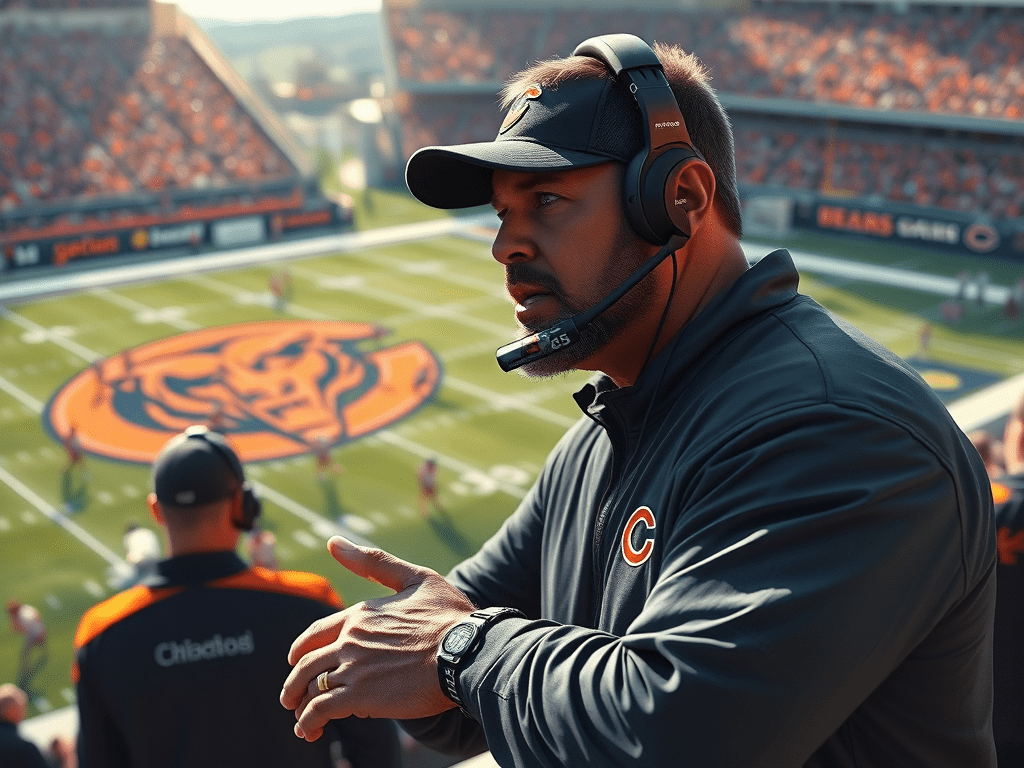
    NFL football has been an integral part of my life for over 70 years. Growing up in Chicago, I became a devoted fan of the Bears at a young age and have carried that loyalty with me throughout my career, which has taken me to various NFL cities such as Green Bay, Seattle, Baltimore, Minneapolis, Chicago and Washington D.C., just to name a few. But now, as I prepare for the upcoming NFL season and strategize potential wagers, I can’t help but feel conflicted. It’s not just about the game or my love for it; it’s also about remembering the friends and fellow fans who have passed away in the last year.

    One of those friends was Bill Ruder, a kind and impactful teacher who left a lasting impression on many young minds during our time in Minneapolis. Both my daughter and son (who passed away over a decade ago) adored Bill. There was no one I trusted more than Bill to speak at my son’s funeral. Bill was a die-hard Packers fan, and we would often banter online about our teams’ rivalry, and I will miss that camaraderie.

    Living in Green Bay, it was hard not to become a partial fan of the Packers. I remember Bill laughing heartily at one incident shared where I played golf with the Packers at a charity event and saw their defensive tackle John Jurkovic get so frustrated after a bad shot that he threw his club over 150 yards (and almost hitting their punter!).

    Randy Roberts was another friend and dedicated father who was passionate about his Kansas City Chiefs. Randy also lived in the Minneapolis area and we often exchanged ideas and predictions during football season. He loved hearing stories about how my wife and I knew Andy Reid and his wife from our time in Green Bay. Randy and I always agreed that Andy was one of the nicest people with one of the best minds in football, and watching the Chiefs become a true dynasty proved him right.

    Mark Kellar was a close friend from middle and high school who shared my love for football. We played basketball and football together for years and he went on to greatness, leading the entire NCAA Division IA in rushing in 1973 before playing for the Minnesota Vikings for 5 years. Despite losing touch, we reconnected in Minneapolis a few years ago, reminiscing about old times at the racetrack over cigars and bourbon.

    As I reflect on these memories, I can’t help but feel a twinge of sadness at the thought of having fewer friends to talk football with this season. But I also know that their memories will live on. I will never watch a Packer, Chief or Viking game without thinking about them.